
CRTI / THE METAPHYSICS OF LABIRINTH
Experience shapes identity. Identity shapes experience.
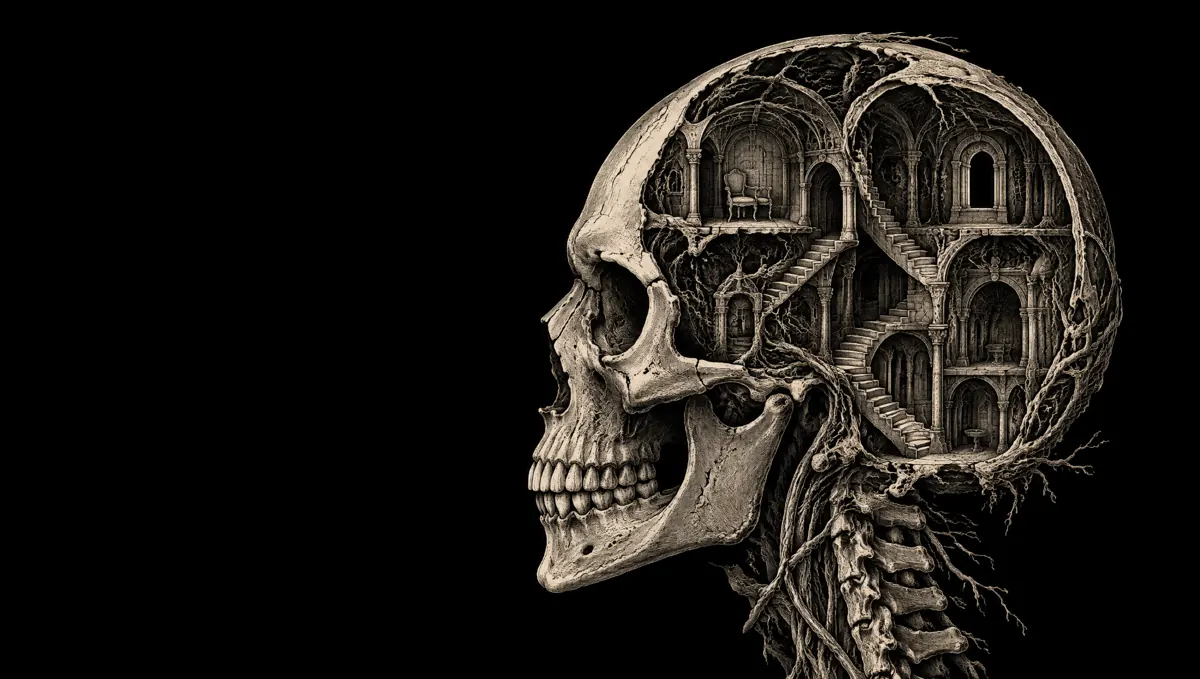
The structure of LABIRINTH begins with an encounter. Something appears, changes or makes itself impossible to ignore. The visitor responds, and the world carries that response forward.
The underlying framework is CRTI: Confrontation, Response, Transformation, Identity. These form a cycle. What we encounter asks for a response; the response changes or reinforces us; that shapes how we meet the next encounter.
In the experience, this becomes a relationship between choices and spaces. Some decisions open new routes. Other sequences ask the visitor to sit with a consequence after the choice has already been made.
The five states—Still, Mask, Virus, Broken and Void—give different forms to that relationship. They can coexist within a person, and different encounters can bring different states forward.
Returning to the experience creates an opportunity to meet the structure again. The spaces may be familiar. The response, and the route it opens, can change.
Who shapes whom?
LABIRINTH gives an inner process a physical world. A corridor can hold a memory; a room can become a confrontation. What happens around you becomes inseparable from how you respond to it.
Experience and identity act on one another. Encounters leave traces in the self, while memory and expectation shape how the next encounter is understood. A familiar room may be met differently on a return.
The five states give cinematic form to this relationship. They are symbolic expressions of what can come forward in a moment, rather than fixed diagnoses or permanent categories of people.
Do our experiences determine who we are—or does who we are determine how we experience the world?